Barigen 4 mg (Baricitinib) Tablets
Disclaimer: Before purchasing any medicine, always verify whether there is a valid drug license.
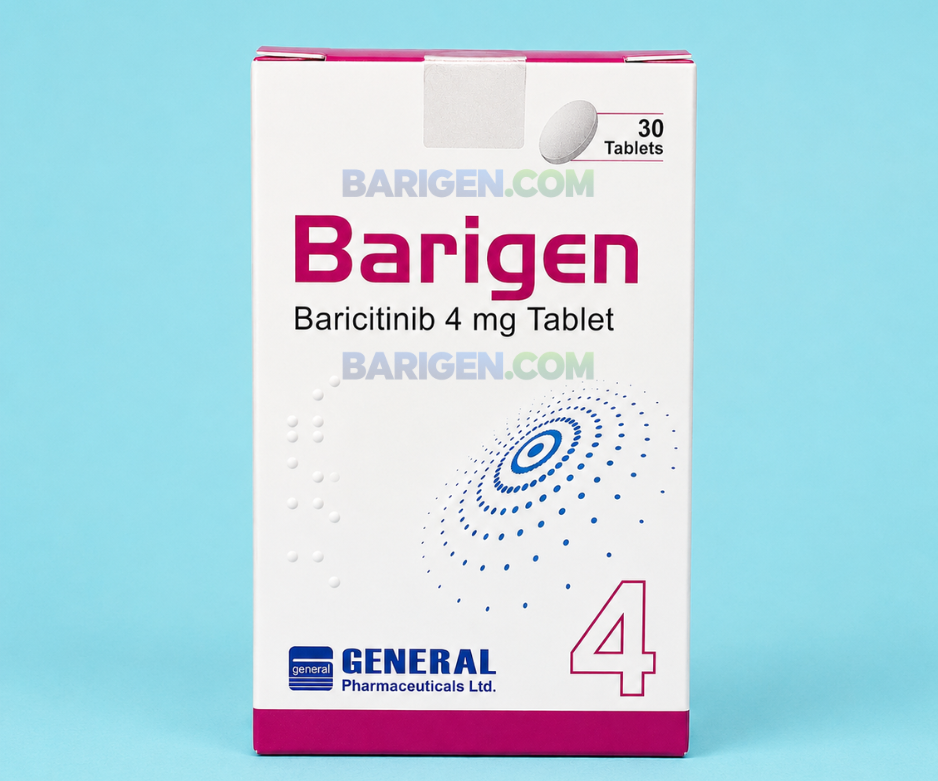
Baricitinib (4 mg), a contemporary, selective, and reversible inhibitor of Janus Kinases (JAK1 and JAK2), is available as a prescription oral preparation under the brand name Barigen 4 mg. The product functions as a bioequivalent and reasonably priced generic version of the groundbreaking medication Olumiant® (Eli Lilly & Co.) and is produced by General Pharmaceuticals Ltd. under rigorous control of Current Good Manufacturing Practices (cGMP).
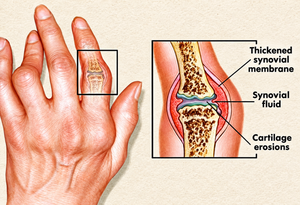
Barigen 4 mg is authorized for the treatment of patients with moderate and severe active rheumatoid arthritis (RA) who do not respond well to conventional disease-modifying anti-rheumatic medications (DMARDs) and biological TNF inhibitors, as well as severe alopecia areata, a condition marked by extensive hair loss of the scalp, eyebrows, and lashes.
Additionally, certain hospitalized adult patients with severe COVID-19 who require additional oxygen can utilize baricitinib. A single daily oral pill called Barigen 4 mg is a synthetic DMARD (tsDMARD) that inhibits cytokine-induced inflammatory pathways from within the cells.
| Attribute | Specification |
|---|
| Brand Name | Barigen |
| Generic Name | Baricitinib (INN) |
| Dosage Strength | 4 mg per tablet (also produced in 2 mg strength) |
| Dosage Form | Oral film-coated tablet |
| Therapeutic Class | Janus Kinase (JAK1/JAK2) Inhibitor; Targeted Synthetic DMARD (tsDMARD) |
| ATC Code | L04AA37 / L04AF02 (Selective Immunosuppressants) |
| Manufacturer | General Pharmaceuticals Ltd. (Dhaka / Gazipur, Bangladesh) |
| Innovator Reference Brand | Olumiant® (Eli Lilly and Company / Incyte Corporation) |
| Standard Packaging | Box containing 30 tablets (3 blister strips of 10 tablets each) with leaflet |
| Regulatory Status | Approved by DGDA (Bangladesh); manufactured for domestic use and export |
| Prescription Status | Prescription Only Medicine (Rx) |
| Route of Administration | Oral (Systemic) |
| Storage Temperature | Store below 30°C (86°F); protect from moisture, light, and heat |
General Pharmaceuticals Ltd. About the Manufacturer
Bangladesh-based General Pharmaceuticals Limited (GPL) is a pharmaceutical company that specializes in creating and manufacturing final pharmaceutical products. Since its founding in the 1980s, the company has created a wide range of medications for both home and foreign markets.
Head Office: General Pharmaceuticals Limited. Sara Aftab Tower, 29 Ring Road, Holdings No. 6/1/A, Shyamoli, Adabor, Dhaka-1207.
Holdings no. 6/1/A, 29 Ring Road, Sara Aftab Tower, Adabor Main Rd, Dhaka 1207, Bangladesh
The firm creates medications in a variety of dosage formats and therapeutic areas. Tablets, capsules, oral liquids, ophthalmic goods, sterile products, injectables, large-volume parenterals, and other pharmaceutical formulations can all be produced at its facilities.
General Pharmaceuticals Ltd. produces the baricitinib product known as Barigen 4 mg.
Because multiple companies may develop goods with the same active component, manufacturer information is crucial for validating a medication.
Before using a product, patients and medical professionals should confirm its name, strength, manufacturer, batch information, and any relevant registration details.
What Is Barigen 4 mg (Baricitinib)?
Barigen 4 mg is a systemic immunomodulator used to treat inflammatory and autoimmune illnesses. The immune system aids in defending the body against infection by pathogens like bacteria and viruses in healthy individuals. Immune signaling dysregulation causes the body’s immune system to get confused and attack its own tissues as if they were dangerous, which leads to autoimmune diseases.
The pharmacological substance utilized in Barigen is called baricitinib. Baricitinib selectively inhibits certain cell enzymes, so controlling inflammation without changing the physiology of other bodily systems, in contrast to other immunosuppressive medications that nonspecifically suppress a variety of bodily systems.
Generic Equivalent to Olumiant®
Barigen 4 mg provides the same active chemistry, molecular structure (C₁₆H₁₇N₇O₂S), dose strength, and drug release characteristics as the international standard product Olumiant®. By sourcing highly pure active pharmaceutical ingredients (APIs) and adhering to rigorous bioavailability and dissolution testing, Varigen provides patients around the world with an affordable and accessible treatment route for chronic autoimmune diseases without compromising therapeutic efficacy or drug safety.
Active Ingredient & Pharmaceutical Strength
Every film-coated tablet
includes baricitinib INN 4 mg.
The 4 mg dosage reflects the
ideal therapeutic target for
treating severe alopecia areata and global rheumatology
protocols. For patients
needing titration or those with moderate renal impairment, a 2 mg formulation is produced, enabling clinicians to
adjust treatment
based on individual patient kinetics and organ function. How Does Baricitinib (Barigen 4 mg) Work?
To grasp the functioning of Barigen 4 mg, it’s beneficial to analyze the intracellular communication routes of the human immune system.
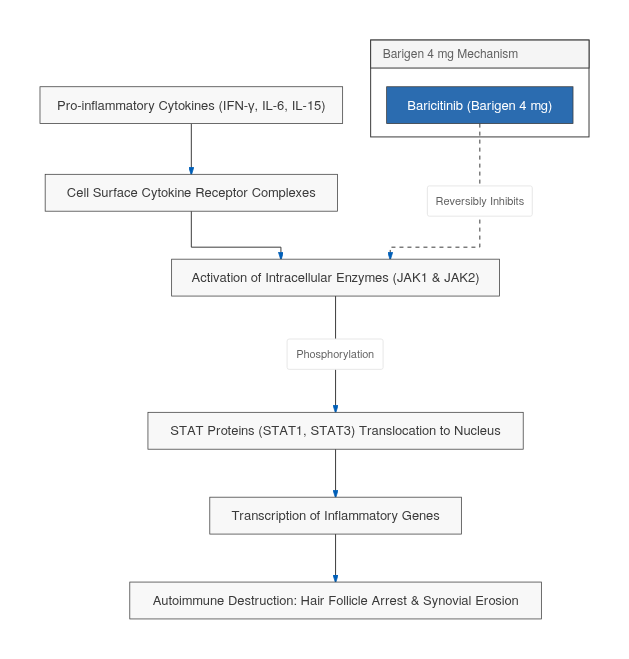
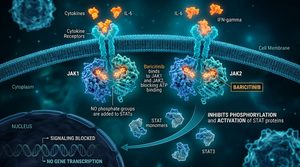
The JAK1 and JAK2 Signaling Pathway Explained
Inflammatory mediators such as interferon-gamma, interleukin-6, and interleukin-15 utilize signaling pathways to interact with their receptors upon binding to white blood cells. These receptors utilize enzymes found within cells, known as Janus Kinases, including JAK1, JAK2, JAK3, and TYK2, to relay the signal to the nucleus.
Baricitinib functions as a reversible and selective inhibitor of the JAK1 and JAK2 enzymes. Baricitinib blocks enzyme activity by attaching to the ATP-binding site. This inhibits transcription factors (signal transducer and activator of transcription) from becoming activated through phosphorylation and moving to the nucleus.
Restoring Hair Follicle Immune Privilege in Alopecia Areata
Hair follicles are specialized structures that have “immune privilege,” indicating they are inherently protected from autoimmune monitoring. In cases of alopecia areata:
Auto-reactive CD8+ NKG2D+ cytotoxic T cells penetrate the protective barrier and cluster around the hair follicle. Under the microscope, they appear as a “cloud of bees.” These T cells secrete large amounts of interferon-gamma (IFN-γ) and IL-15, triggering inflammation within the hair follicle.
That inflammation pushes hair out of its active growth stage (anagen) and pushes it into the shedding stage (telogen) much too early. Baricitinib 4 mg halts this process immediately.
By inhibiting the JAK1/JAK2 pathway that relies on IFN-γ and IL-15, baricitinib eliminates the accumulation of lymphocytes, restores the immune privilege of hair follicles, and stimulates inactive hair roots to regrow scalp hair, eyebrows, and eyelashes.
Controlling Joint Synovitis in Rheumatoid Arthritis
Indications & Clinical Uses
Barigen 4 mg (Baricitinib) is clinically validated for specific, medically diagnosed immune-mediated diseases. It is essential to distinguish between approved indications and unverified conditions.
Severe Alopecia Areata (Hair Regrowth & Scalp Coverage)
Alopecia areata is an autoimmune condition characterized by patchy or total hair loss on the scalp, face, and body. Barigen 4 mg is indicated for
Alopecia Areata
Severe alopecia areata in adults, typically defined as a baseline Severity of Alopecia Tool (SALT) score of 50 or greater (indicating 50\% or more scalp hair loss, including alopecia totalis and alopecia universalis).
- Landmark Clinical Evidence: In the pivotal double-blind, placebo-controlled Phase III trials BRAVE-AA1 and BRAVE-AA2 published in the New England Journal of Medicine, patients treated with baricitinib 4 mg once daily demonstrated significant, progressive hair regrowth:
- Approximately 35% to 39% of patients achieved a SALT score ≤20 (representing 80% or greater scalp hair coverage) at Week 36, compared to only 35% to 39% on placebo.
- Significant regrowth was also observed in eyebrow and eyelash coverage among patients with severe baseline involvement.
- Long-term extension data confirmed that treatment benefits continue to build between Week 36 and Week 52 with sustained daily therapy.
- Important Medical Distinction: Barigen 4 mg is NOT a cosmetic remedy, nor is it indicated for common androgenetic alopecia (male or female pattern baldness), stress-related telogen effluvium, or fungal scalp infections. It works specifically on autoimmune-mediated follicular arrest.
Moderate-to-Severe Active Rheumatoid Arthritis (RA)
Barigen 4 mg is indicated for the treatment of moderate-to-severe active rheumatoid arthritis in adult patients who have had an inadequate clinical response or intolerance to one or more disease-modifying antirheumatic drugs (such as methotrexate, leflunomide, or sulfasalazine) or biologic TNF antagonists (such as adalimumab or etanercept).
- Clinical Trial Outcomes: In the RA-BEAM and RA-BUILD trials, baricitinib demonstrated statistically superior improvements in American College of Rheumatology 20% response criteria (ACR20) compared to placebo and active comparators, leading to significant reductions in morning stiffness duration, pain scores, and radiographic progression of joint damage.
Severe COVID-19 in Hospitalized Patients
During the global SARS-CoV-2 pandemic, baricitinib emerged as a critical therapeutic agent for hospitalized adult patients suffering from severe viral pneumonia requiring supplemental oxygen, high-flow oxygen, non-invasive ventilation, or mechanical ventilation.
- In the multinational ACTT-2 and COV-BARRIER trials, baricitinib in combination with standard care (including remdesivir and corticosteroids) significantly reduced time to clinical recovery and demonstrated a 38% relative reduction in 28-day all-cause mortality among hospitalized patients with severe COVID-19.
Moderate-to-Severe Atopic Dermatitis (International Indications)
Doctors in the European Union, the UK, and a few other places prescribe baricitinib for adults with moderate-to-severe eczema who need systemic treatment. In the BREEZE-AD1 and BREEZE-AD2 clinical trials, patients taking baricitinib once a day noticed their itching easing up within just 48 hours. Over the next 16 weeks, their skin cleared up too.
Dosage Guidelines & Safe Administration
Barigen 4 mg must be taken exactly as prescribed by your physician. Dosage schedules should never be adjusted without medical consultation. Individual dosing depends on the medical indication, baseline kidney and liver function, patient age, and concurrent medications.

Standard Adult Dosing by Indication
- Severe Alopecia Areata:
- Starting Dose: The standard recommended starting dose is 2 mg once daily.
- Titration to 4 mg: For patients with nearly complete scalp hair loss (SALT ≥90\ge 90≥90, including totalis or universalis), or for patients who show an insufficient clinical response after 24 to 36 weeks at 2 mg, the physician may increase the dosage to 4 mg once daily.
- Maintenance: Once an acceptable response is achieved on 4 mg, clinicians may consider stepping down to 2 mg once daily to maintain remission while minimizing long-term drug exposure.
- Rheumatoid Arthritis: In the European Union, the UK, and international clinical guidelines, the recommended dose is 4 mg once daily. A reduction to 2 mg once daily is recommended once sustained disease control is achieved, or in patients aged 75 years and older. In the United States, the FDA-approved dose for RA is 2 mg once daily.
- Hospitalized COVID-19: The authorized dosage is 4 mg once daily for 14 days or until hospital discharge, whichever occurs first.
Mandatory Dosage Adjustments for Renal Impairment
Because baricitinib is cleared predominantly by the kidneys (≈ 75 % excreted via renal elimination), estimating renal function via the estimated Glomerular Filtration Rate (eGFR) is mandatory before treatment initiation:
eGFR ≥ 60 mL/min/1.73 m² (Normal to Mild Impairment): No dosage adjustment needed.
eGFR 30 to <60 mL/min/1.73 m2 (Moderate Impairment): The dose must be halved. Patients who would otherwise receive 4 mg once daily must receive 2 mg once daily. Patients on a 2 mg daily regimen must reduce to 1 mg once daily.
eGFR <30 mL/min/1.73 m² (Severe Impairment / ESRD / Dialysis): Barigen is not recommended for rheumatoid arthritis or alopecia areata due to insufficient safety data and elevated drug accumulation.
How to Take Barigen 4 mg Tablets Correctly
- Administration Timing: Take one tablet once daily at the same time each day (morning or evening) to maintain consistent blood levels.
- With or Without Food: Barigen 4 mg can be taken with meals or on an empty stomach. Food does not meaningfully alter its absorption.
- Swallow Whole: Swallow the tablet whole with a full glass of water. Do not crush, split, chew, or dissolve the film-coated tablet, as this can alter the drug’s absorption rate.
- Treatment Duration: Alopecia areata and rheumatoid arthritis are chronic conditions. Visible hair regrowth typically requires 12 to 24 weeks of uninterrupted treatment, with peak density developing by weeks 36 to 52. Discontinuing treatment often causes regrown hair to shed over subsequent months as autoimmune inflammation returns.
What to Do in Case of a Missed Dose
- If you miss a dose, take it as soon as you remember on that same day.
- If it is almost time for your next scheduled dose, skip the missed tablet and resume your regular daily schedule.
- Never take two tablets at the same time or take extra medicine to compensate for a forgotten dose.
Side Effects & Adverse Reactions
Like all systemic medications affecting the immune system, Barigen 4 mg can cause side effects. Most are mild to moderate and manageable, but patients must remain vigilant for signs of serious complications.
Common and Manageable Side Effects
These side effects occur in 1% to 10% of patients and typically subside as the body adapts to therapy:
- Upper Respiratory Tract Infections: Nasopharyngitis, common cold symptoms, sinusitis, or sore throat (observed in ≈14% of clinical trial participants).
- Headache: Mild to moderate tension headaches (reported in ≈6%approx).
- Gastrointestinal Symptoms: Mild nausea, abdominal discomfort, or diarrhea (up3% to 5%).
- Acneiform Eruptions or Folliculitis: Small papules or mild acne, particularly across the forehead and back (commonly seen in alopecia patients as hair follicles reactivate).
- Lipid Elevations: Increases in total cholesterol, low-density lipoprotein (LDL-C), and high-density lipoprotein (HDL-C), usually detected within the first 12 weeks of therapy. These elevations respond well to standard dietary measures or statin therapy if required.
- Transient Transaminase Elevations: Mild, asymptomatic increases in liver enzymes (ALT and AST).
Serious Adverse Effects Requiring Immediate Medical Attention
If you experience any of the following symptoms, stop taking Barigen and seek emergency medical care immediately:
- Signs of Serious Infection: High fever (38∘C or 100.4°F100.4∘F), persistent chills, severe cough with colored phlegm, night sweats, burning sensation during urination, or non-healing skin sores.
- Herpes Zoster (Shingles): Painful, blistering skin rash concentrated along a specific nerve path on one side of the body or face.
- Symptoms of Deep Vein Thrombosis (DVT): Sudden pain, swelling, warmth, or noticeable redness in one leg (usually the calf or thigh).
- Symptoms of Pulmonary Embolism (PE): Sudden shortness of breath, unexplained sharp chest pain that worsens with deep breathing, rapid heart rate, or coughing up blood.
- Signs of Gastrointestinal Perforation: Severe, sudden abdominal pain accompanied by fever, nausea, or vomiting.
- Allergic Reactions: Swelling of the lips, tongue, face, or throat, or difficulty breathing.
Important Safety Warnings, Boxed Warnings & Precautions
Baricitinib belongs to the Janus Kinase (JAK) inhibitor class. Regulatory authorities including the US FDA and the European Medicines Agency (EMA) have established class-wide Boxed Warnings for JAK inhibitors when prescribed for chronic inflammatory conditions.
Serious Infections & Pre-Treatment Screening
Because Barigen 4 mg dampens specific immune pathways, patients have a higher risk of developing serious bacterial, mycobacterial, fungal, and viral infections that may lead to hospitalization.
- Tuberculosis (TB) Screening: All patients must be tested for active and latent tuberculosis using a tuberculin skin test (PPD) or Interferon-Gamma Release Assay (QuantiFERON-TB Gold) before starting Barigen. If latent TB is detected, preventive anti-TB therapy must be initiated before beginning baricitinib.
- Viral Hepatitis Screening: Serological screening for Hepatitis B (HBsAg, anti-HBc) and Hepatitis C (anti-HCV) is required. Active viral hepatitis must be managed before initiating treatment, as immunosuppression can cause viral reactivation.
- Infection Management: If a patient develops a serious infection during therapy, Barigen must be paused until the infection is resolved with appropriate antimicrobial therapy.
Cardiovascular Risks, Thrombosis & Mortality
In large post-marketing safety studies of another JAK inhibitor (tofacitinib) in patients aged 50 and older with at least one cardiovascular risk factor, higher rates of all-cause mortality, major adverse cardiovascular events (MACE) (such as myocardial infarction and stroke), and thrombosis (deep vein thrombosis and pulmonary embolism) were observed compared to TNF blockers.
- Clinicians should carefully weigh the benefits and risks of Barigen in patients with a history of cardiovascular disease, current or past smoking, obesity, prolonged immobility, or known hypercoagulable disorders.
Malignancy and Lymphoma Risks
Lymphomas, non-melanoma skin cancers (NMSC), and other solid-organ malignancies have been reported in patients treated with JAK inhibitors. Periodic dermatological skin examinations are recommended for patients at elevated risk for skin cancer.
Routine Laboratory Monitoring Schedule
Safe long-term therapy requires baseline and periodic blood testing. The recommended monitoring schedule includes:
| Laboratory Test | Baseline (Pre-Treatment) | Week 12 Post-Initiation | Every 3 to 6 Months Thereafter |
|---|
| Complete Blood Count (CBC) | Mandatory | Mandatory | Routine monitoring |
| Absolute Neutrophil Count (ANC) | Do not start if <1000/μL | Pause if <500/μL | Routine monitoring |
| Absolute Lymphocyte Count (ALC) | Do not start if <500/μL | Pause if <500/μL | Routine monitoring |
| Hemoglobin (Hb) | Do not start if <8 g/dL | Pause if <8 g/dL | Routine monitoring |
| Renal Function (Serum Creatinine, eGFR) | Mandatory | Routine check | Routine check (dose adjustment if eGFR <60) |
| Liver Transaminases (ALT, AST) | Mandatory | Routine check | Pause if ALT/AST >5×times>5× ULN |
| Fasting Lipid Profile (LDL, HDL, Triglycerides) | Mandatory | Mandatory | Periodic management as clinically indicated |
| Latent TB & Viral Hepatitis Screen | Mandatory | As clinically indicated | As clinically indicated |
Drug Interactions & Contraindications
Critical Drug-Drug Interactions
Inform your prescribing doctor and dispensing pharmacist of all prescription medications, over-the-counter drugs, vitamins, and herbal supplements you take.
- Probenecid (Strong OAT3 Inhibitor): Organic Anion Transporter 3 (OAT3) mediates the active renal secretion of baricitinib. Co-administration with probenecid roughly doubles baricitinib exposure (AUC). If taken together, the Barigen dose must be reduced by 50% (e.g., reduce 4 mg to 2 mg daily; reduce 2 mg to 1 mg daily).
- Live Attenuated Vaccines: Administration of live vaccines (such as MMR, yellow fever, oral typhoid, or live zoster) is strictly contraindicated immediately prior to and during Barigen therapy due to the risk of vaccine-strain infection. Non-live vaccines (such as mRNA COVID-19 vaccines, recombinant shingles vaccine Shingrix, and inactivated influenza vaccines) are safe, though immune response may be attenuated.
- Biologics & Other JAK Inhibitors: Concomitant use with biologic DMARDs (e.g., adalimumab, infliximab, secukinumab, dupilumab) or other JAK inhibitors (e.g., tofacitinib, upadacitinib, ruxolitinib) has not been studied and is not recommended due to an elevated risk of severe immunosuppression.
- Potent Immunosuppressants: Co-administration with chronic systemic corticosteroids (at high doses), cyclosporine, or azathioprine significantly elevates infection risk and requires cautious clinical evaluation.
Absolute and Relative Contraindications
- Absolute Contraindications:
- Known hypersensitivity to baricitinib or any excipient in Barigen tablets.
- Active tuberculosis or other serious, uncontrolled systemic infections.
- Severe hepatic impairment (Child-Pugh Class C).
- Pregnancy and active breastfeeding.
- Relative Contraindications / Precautions:
- Severe renal impairment (eGFR <30 mL/min/1.73 m2<30\text{ mL/min/1.73 m}^2<30 mL/min/1.73 m2).
- History of recurrent deep vein thrombosis, pulmonary embolism, or recent stroke/myocardial infarction.
- Active diverticulitis or risk factors for gastrointestinal perforation.
Pregnancy, Contraception & Breastfeeding Warnings
- Pregnancy Category: Baricitinib is contraindicated in pregnancy. Preclinical animal studies showed evidence of embryo-fetal lethality, structural malformations, and reduced fetal body weight at exposures comparable to human therapeutic doses.
- Contraceptive Requirement: Women of childbearing potential must use effective contraception during treatment with Baricitinib 4 mg and for at least 1 week following the final dose. If pregnancy occurs, treatment must be discontinued immediately and the patient’s obstetrician notified.
- Lactation: Baricitinib passes into breast milk in animal studies. Because of the risk of serious adverse reactions and immune suppression in nursing infants, breastfeeding must be discontinued during treatment.
Proper Storage & Handling Instructions
- Store Barigen 4 mg in its original blister packaging until immediately prior to consumption.
- Keep at controlled room temperature below 30°C (86°F) in a dry location.
- Do not store in humid environments like bathroom medicine cabinets.
- Protect tablets from direct sunlight, radiant heat, and freezing temperatures.
- Keep out of reach of children and pets.
Baricitinib originator and reference product
The originator/reference medicine associated with baricitinib is Olumiant, a branded medicine containing the active ingredient baricitinib. Baricitinib was developed through research involving Incyte Corporation, with Eli Lilly and Company collaborating in its development and commercialization. In the European Union, Olumiant received marketing authorization in February 2017, and the current EU marketing authorization holder is Eli Lilly Nederland B.V.
Olumiant contains the same active pharmaceutical ingredient, baricitinib, that is used in Barigen 4 mg. However, Barigen is a separate product manufactured by General Pharmaceuticals Ltd. A generic or branded-generic product should not be described as being manufactured by the originator company unless that company is actually responsible for manufacturing the specific product. Product manufacturer, registration status, formulation, packaging, and availability may differ between countries.
What is Olumiant?
Olumiant is the branded medicine containing baricitinib that serves as an important reference product for baricitinib therapy. The European Medicines Agency identifies Olumiant as containing baricitinib and lists Eli Lilly Nederland B.V. as its marketing authorization holder in the European Union.
Olumiant was initially authorized in the EU for adults with moderate-to-severe active rheumatoid arthritis who had an inadequate response to, or could not tolerate, certain disease-modifying antirheumatic drugs. Its European authorization has subsequently included additional indications.
The existence of an originator product does not mean that every baricitinib product has identical regulatory status in every country. Patients should check the authorization applicable to the product and country concerned.
What conditions can baricitinib treat?
The approved indications for baricitinib differ by jurisdiction.
Rheumatoid arthritis
Baricitinib is authorized in certain jurisdictions for adults with moderate-to-severe active rheumatoid arthritis when previous disease-modifying antirheumatic drug treatment has not produced an adequate response or cannot be tolerated. In the EU, Olumiant may be used alone or together with methotrexate in appropriately selected patients.
Atopic dermatitis
Baricitinib is authorized in the EU for moderate-to-severe atopic dermatitis in adults and pediatric patients from 2 years of age who are candidates for systemic therapy. The exact age requirements and treatment criteria depend on the local authorization.
Alopecia areata
Baricitinib is also used for severe alopecia areata in certain patients. In the EU, the authorized indication includes adults and adolescents from 12 years of age with severe alopecia areata.
Juvenile idiopathic arthritis
Current EU authorization includes baricitinib for selected patients aged 2 years and older with active juvenile idiopathic arthritis who have had an inadequate response to, or intolerance of, specified previous disease-modifying antirheumatic treatments. The authorization covers specified forms of juvenile idiopathic arthritis.
COVID-19
Baricitinib has also been authorized in the United States for certain hospitalized adults with COVID-19 who require specified levels of respiratory support. COVID-19 authorization should not be assumed to apply in every country. Regulatory status and treatment recommendations vary by jurisdiction.
Important safety information
Baricitinib affects immune-system signaling and can increase the risk of certain adverse effects.
Important safety considerations include:
- Serious infections
- Tuberculosis
- Other opportunistic infections
- Malignancies
- Major adverse cardiovascular events
- Thrombosis
- Changes in blood-cell counts
- Changes in liver or lipid laboratory values
- Hypersensitivity reactions
- Gastrointestinal perforation in appropriate clinical circumstances
JAK inhibitors have important safety warnings, and treatment decisions should take individual risk factors into account. Patients should contact their healthcare professional promptly if they develop symptoms suggesting a serious infection or another significant adverse reaction.
Barigen 4 mg vs. Olumiant
Barigen 4 mg and Olumiant contain the same active pharmaceutical ingredient, baricitinib.
The key difference is the product and manufacturer.
| Feature | Barigen 4 mg | Olumiant |
|---|
| Active ingredient | Baricitinib | Baricitinib |
| Strength discussed | 4 mg | Available in authorized strengths/formulations depending on market |
| Product type | Baricitinib product | Reference/originator branded product |
| Manufacturer/company | General Pharmaceuticals Ltd. | Eli Lilly / applicable marketing authorization holder |
| Administration | Oral | Oral |
| Drug class | JAK inhibitor | JAK inhibitor |
Product authorization, formulation, excipients, packaging, and availability can vary between markets.
Why is the originator information important?
Understanding the originator product can help patients distinguish between the active pharmaceutical ingredient and individual branded products.
Baricitinib is the active ingredient. Olumiant is the established branded product containing baricitinib. Barigen 4 mg is a separate baricitinib product containing 4 mg of the active ingredient.
The manufacturer of a particular product should always be verified from its packaging and official regulatory documentation.
General Pharmaceuticals Ltd. Verification Process
Scan the QR code printed on the product box. The QR code will take you to the official General Pharmaceuticals product verification page, where you can complete the verification process.
The QR code will direct you to the General Pharmaceuticals Ltd. E-Verification page, where you can complete the product verification process.
After completing the verification, check the result carefully to confirm whether the product is genuine.
If the verification indicates that the product is fake or unauthorized, do not use it. Report the suspected counterfeit product and take appropriate legal action against the supplier through the Directorate General of Drug Administration (DGDA), World.
Always purchase medicines from licensed pharmacies or authorized suppliers and verify the product before use.
References and regulatory information
For reliable information about baricitinib and Olumiant, consult the applicable national medicines regulator and official product information. The European Medicines Agency identifies Olumiant as a medicine containing baricitinib and records its EU marketing authorization from 13 February 2017. Regulatory approvals, indications, warnings and age restrictions can change over time. Always use the current product information applicable to your country.
Medical Disclaimer
The information provided on Barigen.com is for general educational and informational purposes only. It is not intended to replace professional medical advice, diagnosis, or treatment.
Baricitinib is a prescription medicine that can cause serious adverse effects and may not be appropriate for everyone. Treatment decisions should be made by a qualified healthcare professional after considering the patient’s medical history, current medicines, laboratory results, and individual risk factors. Do not start, stop, or change Barigen 4 mg treatment without professional medical advice. Always refer to the official prescribing information and regulatory requirements applicable in your country.
Frequently Asked Questions (FAQs) About Barigen 4 mg
Is Barigen 4 mg the same as Olumiant®?
Yes, they’re basically the same when it comes to the active ingredient and how they work. Barigen 4 mg is a generic version of Olumiant®, both containing 4 mg of baricitinib. They both block the JAK1 and JAK2 enzymes in your body. The main difference is cost Barigen, made by General Pharmaceuticals Ltd. under cGMP standards, offers a more affordable option.
How long does it take for Barigen 4 mg to regrow hair in Alopecia Areata?
Hair regrowth doesn’t happen overnight. In most clinical trials, the first signs, like soft, tiny colorless hairs, start to pop up around 8 to 12 weeks in. More noticeable scalp coverage, plus eyebrow and eyelash growth, usually shows up by weeks 24 to 36. For the fullest results, expect anywhere from 36 to 52 weeks of taking Barigen every day.
What happens if I stop taking Barigen 4 mg after my hair grows back?
Alopecia areata doesn’t just go away; it’s a lifelong autoimmune problem. Baricitinib helps by stopping your immune system from attacking hair follicles, but it doesn’t fix the root cause. So if you quit taking it, the inflammation often comes back, and most people start shedding the regrown hair within 2 to 6 months. For many, long-term maintenance under a doctor’s care is the way to keep results.
Can Barigen 4 mg treat common male or female pattern baldness?
No, Barigen 4 mg is only meant for autoimmune alopecia areata. It doesn’t work for male or female pattern baldness, which happens because of DHT sensitivity, not immune attack. Using a JAK inhibitor for pattern hair loss won’t help and just puts you at risk for side effects you don’t need.
Can I buy Barigen 4 mg online without a prescription?
No, you can’t. Barigen 4 mg is a powerful drug that can cause serious infections, blood clots, and issues with your blood work. Real pharmacies will always need a prescription from a doctor. If a website sells you baricitinib without a prescription, it’s not safe or legal; don’t risk it.
Why do I need blood tests before and during treatment with Barigen?
Baricitinib can affect your bone marrow, liver, and blood fats, so you need regular blood tests to make sure everything’s still normal. Doctors check for TB and viral hepatitis before you start. After that, expect check-ins at week 12 and every few months to make sure your blood counts, kidney and liver health, and cholesterol are all in line.
Can I take Barigen 4 mg if I have kidney problems?
It depends on how well your kidneys work. Baricitinib leaves your body mostly through your kidneys. If your kidney function (eGFR) is between 30 and 59 mL/min, your doctor will cut your dose in half, so 2 mg instead of 4 mg. If your eGFR drops below 30, Barigen isn’t recommended at all.
What should I do if I get a cold, fever, or the flu while taking Barigen?
If you get sick, like with a fever over 38°C (100.4°F), a bad cough, chills, or trouble peeing, let your doctor know right away. They may tell you to stop taking Barigen for a while until you’re better, because taking an immunosuppressant while you have an infection can make things worse.
What does “baricitinib 4 mg para que sirve” mean for international patients?
For Spanish speakers, “baricitinib 4 mg para que sirve” means “what is baricitinib 4 mg used for?” Doctors use baricitinib 4 mg to treat serious alopecia areata, certain cases of moderate-to-severe rheumatoid arthritis when other treatments don’t work, and severe COVID-19 in hospitalized patients who need oxygen.