
Olumiant (baricitinib) is a Janus kinase (JAK) inhibitor approved in the United States for treating severe alopecia areata in eligible patients. This autoimmune condition causes hair loss on the scalp and other parts of the body. Baricitinib works by modifying immune system signaling involved in the disease process.
Baricitinib is available in different tablet strengths, including 4 mg. However, the appropriate dose depends on the patient’s age, medical history, kidney function, treatment response, and prescribing guidance.

This article explains how baricitinib works, who may be eligible for treatment, important safety considerations, and questions to discuss with a qualified prescriber. It also clarifies the distinction between Olumiant and generic baricitinib products, including Barigen 4 mg.
What Is Olumiant (Baricitinib)?
Olumiant is a prescription medicine containing baricitinib. It belongs to a class of medicines known as Janus kinase inhibitors, which affect specific signaling pathways involved in immune activity.
In the United States, baricitinib is approved for adults with certain inflammatory conditions and for eligible adults and adolescents aged 12 years and older with severe alopecia areata. Approved indications and age requirements may differ by country.
Alopecia areata occurs when the immune system mistakenly targets hair follicles. It can cause patchy hair loss or more extensive loss affecting the scalp and body.
Baricitinib helps regulate immune signaling associated with this process. Treatment may support hair regrowth in eligible patients, although individual results vary.
How Does Baricitinib Work for Severe Alopecia Areata?
Baricitinib inhibits JAK1 and JAK2, enzymes involved in transmitting signals from certain cytokines. These signaling pathways contribute to immune responses associated with alopecia areata.
By inhibiting these pathways, baricitinib can reduce specific immune signals involved in the condition. This may allow affected hair follicles to resume producing hair in some patients.
However, baricitinib does not guarantee complete hair regrowth or permanently eliminate alopecia areata. Some patients respond better than others, and continued treatment may be necessary to maintain improvement.
Who May Be Eligible for Baricitinib Treatment?
A dermatologist or another qualified prescriber may consider baricitinib for patients with severe alopecia areata after reviewing their condition and medical history.
Factors that may influence treatment decisions include:
- The extent of scalp hair loss.
- Whether eyebrow, eyelash, or body hair is affected.
- How long the condition has been present.
- Previous treatments and their outcomes.
- Other medical conditions and current medicines.
- Infection risks and relevant laboratory results.
Baricitinib is not appropriate for everyone. A healthcare professional should determine whether its potential benefits outweigh its risks for an individual patient.
Baricitinib 4 mg: Understanding the Tablet Strength
Baricitinib 4 mg is one available tablet strength. The strength printed on a medicine package indicates the amount of active ingredient in each tablet; it does not establish the correct dose for every patient.
For severe alopecia areata, US prescribing information describes a recommended starting dose of 2 mg once daily for eligible patients. A prescriber may increase the dose to 4 mg once daily when clinically appropriate, depending on factors such as treatment response and disease severity.
Lower doses or different treatment decisions may be necessary for certain patients, including those with impaired kidney function or specific safety concerns.
Patients should follow their prescription instructions rather than starting, increasing, reducing, or stopping baricitinib independently.
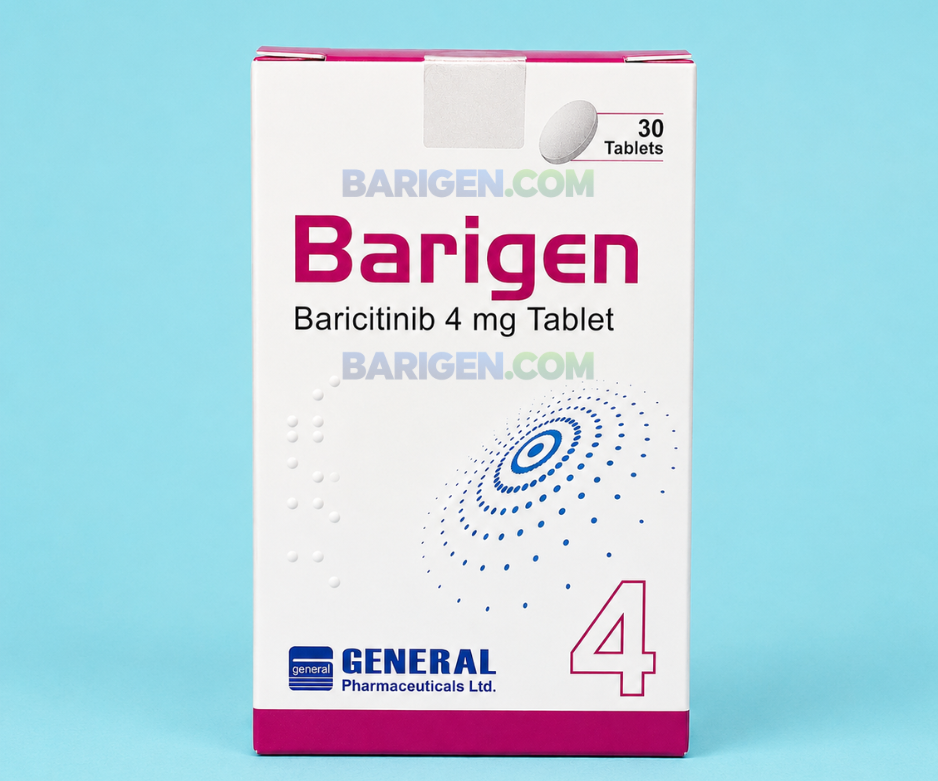
What Is Barigen 4 mg?
Barigen 4 mg is a product name associated with baricitinib. It is important to distinguish a generic product from Olumiant, the established brand name for baricitinib.
Before using any baricitinib product, patients and caregivers should confirm the active ingredient, tablet strength, manufacturer, product registration, packaging information, and dispensing requirements.
Brand names and regulatory approvals can vary across markets. The approval of Olumiant for a particular condition does not automatically establish that every baricitinib product has the same local authorization or labeling.
A licensed pharmacist can help verify product information and explain the requirements for obtaining a prescription medicine.
What Benefits May Treatment Provide?
Clinical studies have shown that baricitinib can support meaningful scalp hair regrowth in some adults with severe alopecia areata.
Potential benefits include:
- Improvement in scalp hair coverage.
- Regrowth in areas affected by extensive hair loss.
- Improvement that may develop gradually during treatment.
- A possible reduction in the visible impact of severe hair loss.
Treatment outcomes vary. Some patients experience substantial regrowth, while others experience limited improvement or no meaningful response.
Hair regrowth generally requires time and assessment over multiple months. A prescriber can evaluate progress and determine whether continuing treatment is appropriate.
Important Safety Warnings and Precautions
Baricitinib can cause serious adverse effects. Patients should review its risks with their prescriber before treatment.

Serious Infections
Baricitinib may increase susceptibility to infections, including serious infections. Patients should tell their prescriber about current infections, recurring infections, tuberculosis exposure, and relevant medical history.
Screening for tuberculosis and other infections may be necessary before treatment. Patients should seek medical advice promptly if they develop symptoms of a potentially serious infection.
Blood Clots and Cardiovascular Risks
JAK inhibitors carry warnings concerning blood clots and certain cardiovascular events. Individual risk depends on factors such as medical history, age, smoking, and other health conditions.
Patients should discuss their personal risk factors before starting treatment and seek urgent medical attention for symptoms that may indicate a serious cardiovascular event or blood clot.
Cancer-Related Considerations
Baricitinib carries warnings concerning malignancies. The relevance of these risks varies among patients, and a prescriber should consider personal medical history and other risk factors when assessing treatment suitability.
Changes in Blood Counts and Laboratory Results
Baricitinib may affect blood cell counts, cholesterol levels, liver-related laboratory results, and other measurements.
A prescriber may request baseline and follow-up laboratory testing to identify changes that could require treatment adjustments or additional evaluation.
Pregnancy and Breastfeeding
Patients who are pregnant, planning pregnancy, or breastfeeding should discuss baricitinib with a qualified healthcare professional. Treatment decisions require consideration of available safety information and individual circumstances.
Patients should not assume that a medicine is appropriate during pregnancy or breastfeeding simply because it is effective for another condition.
What Tests and Monitoring May Be Needed?
Before prescribing baricitinib, a clinician may review:
- Medical history and current medicines.
- Tuberculosis status and other infection risks.
- Complete blood count.
- Kidney function.
- Liver-related laboratory results when appropriate.
- Cholesterol levels.
- Vaccination history and other relevant clinical factors.
Follow-up assessments help identify adverse effects and evaluate treatment response. The exact monitoring schedule depends on the patient’s circumstances and applicable prescribing guidance.
Can Baricitinib Interact With Other Medicines?
Yes. Certain medicines may increase the risk of adverse effects or affect whether baricitinib is suitable.
Patients should disclose all prescription medicines, nonprescription medicines, supplements, and herbal products they use.
Particular attention may be needed for other medicines that suppress immune activity, treatments that affect blood counts, and medicines that alter kidney function or infection risk.
Patients should also discuss vaccination plans with their prescriber. Some live vaccines may not be appropriate during treatment.
What Are the Alternatives for Severe Alopecia Areata?
Treatment choices depend on disease severity, age, medical history, previous treatment response, and local approvals.
A dermatologist may discuss options such as:
- Corticosteroids in appropriate clinical circumstances.
- Intralesional corticosteroid treatment for selected patients with limited disease.
- Other systemic treatments when clinically appropriate.
- Other approved medicines, depending on the patient’s eligibility and country.
- Supportive approaches, including wigs and cosmetic options.
Not every treatment is suitable for extensive disease or every age group. Patients should discuss the expected benefits, limitations, and risks of each option with their dermatologist.
Conclusion
Olumiant (baricitinib) is a JAK inhibitor approved in the United States for severe alopecia areata in eligible patients. It can support hair regrowth by modifying immune signaling associated with the condition, but its benefits vary and serious safety risks require careful assessment.
Baricitinib 4 mg and products such as Barigen 4 mg should be considered only within appropriate prescribing, dispensing, and regulatory requirements. Patients should consult a qualified prescriber to assess eligibility, review potential interactions, arrange necessary monitoring, and choose a suitable treatment plan.